
Contra Costa Probation and Parole
Probation and parole both mean a person is out of a jail or prison bed but still under rules set by a court or correctional agency. They are not the same record. Parole in Contra Costa County usually points to a person released from California Department of Corrections and Rehabilitation custody and supervised by CDCR's Division of Adult Parole Operations. Probation points to a local court sentence, pretrial release, adult probation, mandatory supervision, PRCS, or another county supervision path handled by Contra Costa Probation or the court.
The county jail locator does not prove parole or probation status after release. It is a current-custody tool. A person can drop from that locator and still have reporting duties, conditions, a future hearing, or a parole hearing result in a state record. Use the supervision table first, then follow the exact source for the person's custody path.
| Supervision type | Who handles it | Best record path |
|---|---|---|
| State parole | CDCR Division of Adult Parole Operations | CIRIS, DAPO office, and BPH records |
| Adult probation | Contra Costa Probation | Probation, court orders, and case records |
| PRCS or AB 109 supervision | Contra Costa Probation and local reentry partners | Probation, court records, and reentry hub contact |
| Alternative custody | Sheriff Custody Alternative Facility or court program | Program contact, court records, and Sheriff records |
Verify Contra Costa Supervision
A good verification path follows the release source. If the person left Martinez Detention Facility, West County Detention Facility, Marsh Creek Detention Facility, or a custody-alternative placement, start with court and county supervision records. If the person was committed to CDCR after a Contra Costa case, start with state records. The Contra Costa County released inmates path is strongest when the court record, custody agency, and supervision agency agree.
- Decide whether the last custody status was county jail, CDCR state prison, or an alternative-custody program.
- Search the Sheriff In-Custody Locator only as a current-custody check, not as a supervision database.
- For a state-prison case, search CDCR CIRIS and check Board of Parole Hearings dates or outcomes if listed.
- For local supervision, use Contra Costa Probation and the Superior Court Public Portal for the court order.
- Use California VINE for custody-status changes, then confirm the legal reason through the court or agency record.
- Contact the listed parole or probation office when public records do not show enough to route a supervision question.
Note: A missing jail-locator result means the person is not shown in that public current-custody search; it is not a certified discharge record.
Contra Costa Parole Offices
CDCR's parole office source is local enough to be useful for Contra Costa County parole checks. The Northern Region directory lists Contra Costa 1 at 1957 Parkside Drive, Suites 100 and 300, Concord, CA 94519, with the phone number (925) 602-0838. It also lists Berkeley/Oakland 1/East Bay GPS at 1957 Parkside Drive #100 in Concord with the same number. These offices matter when a released state-prison inmate is routed to Contra Costa or the East Bay after CDCR release.
The CDCR Division of Adult Parole Operations page is the state source for parole services, parole conditions, parole requirements, electronic monitoring, and wanted-offender information. The screenshot below comes from that CDCR parole source and shows why DAPO belongs in a Contra Costa parole verification path.
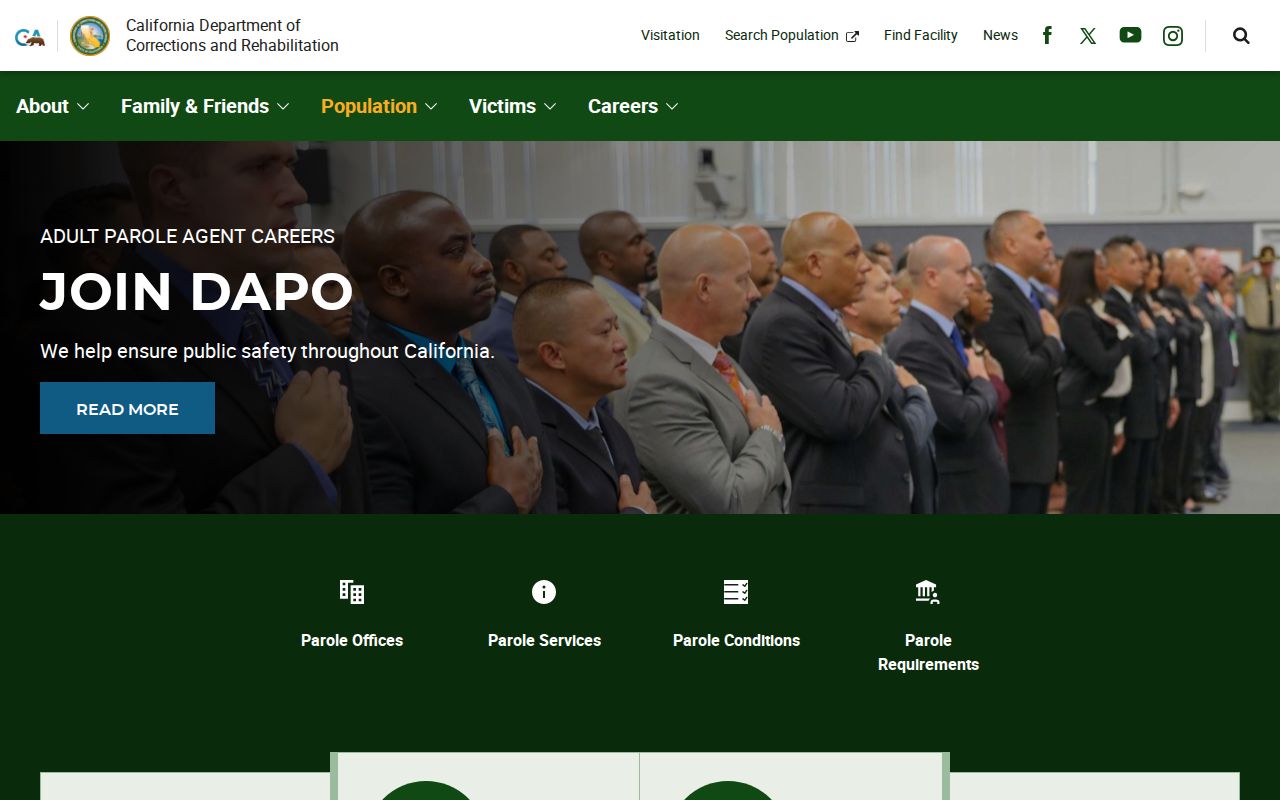
For a person released from CDCR to Contra Costa County, DAPO is a supervision lead; it does not replace the court record, CIRIS result, or the parole office's own routing limits.
Local Supervision Contacts
CDCR Contra Costa / East Bay Parole
1957 Parkside Drive, Suites 100 and 300
Concord, CA 94519
(925) 602-0838
Contra Costa Probation / Office of Reentry & Justice
50 Douglas Drive, Suite 200
Martinez, CA 94553
(925) 313-4000
Monday-Friday, 8:00 a.m.-5:00 p.m., closed noon-1:00 p.m.
Contra Costa Parole Hearings
The California Board of Parole Hearings is not the same thing as a parole officer. BPH conducts parole suitability proceedings and nonviolent offender parole reviews for adults under CDCR jurisdiction. It also handles medical parole proceedings, some mental-health-disorder offender proceedings, sexually violent predator review, and clemency-related investigations when requested by the Governor.
The BPH hearing schedule identifies hearing date, time, location, and whether the hearing is in person or by video conference. The research source says schedules are updated weekly on Thursday morning. The BPH hearing-results page may show outcomes such as grant, denial, stipulation, postponement, waiver, continuance, or rescission. Those terms need the official result page or case record for context.
For Contra Costa County, BPH is relevant only when the person entered CDCR custody from a Contra Costa case or otherwise has a California parole-hearing record. It will not confirm a local jail-only release from Martinez Detention Facility or Marsh Creek Detention Facility.
Contra Costa Reentry Supervision
Contra Costa's local supervision system includes more than ordinary adult probation. The county probation site covers pretrial, adult probation, and local community supervision. The county's Public Safety Realignment material explains that AB 109 moved responsibility for some lower-level post-release populations from the state to counties. That is why a person who sounds like a "parolee" in casual speech may in fact be on PRCS or another local supervision track.
Local supervision can also overlap with the Sheriff Custody Alternative Facility. The facility map research describes electronic home detention, work alternative, county parole, alcohol monitoring, and pretrial release as custody-alternative statuses. A person in one of those programs may be out of a jail bed and still under a court, Sheriff, or probation rule. That is why the release question should not stop with whether the person appears in the jail locator.
The AB109 Reentry Services Hub describes the Reentry Success Center and Contra Costa Reentry Network models as navigation points for people returning to the community after incarceration. The screenshot below is from the county probation reentry source, and it fits this page because release status and local supervision often meet at the reentry hub rather than at the jail counter.
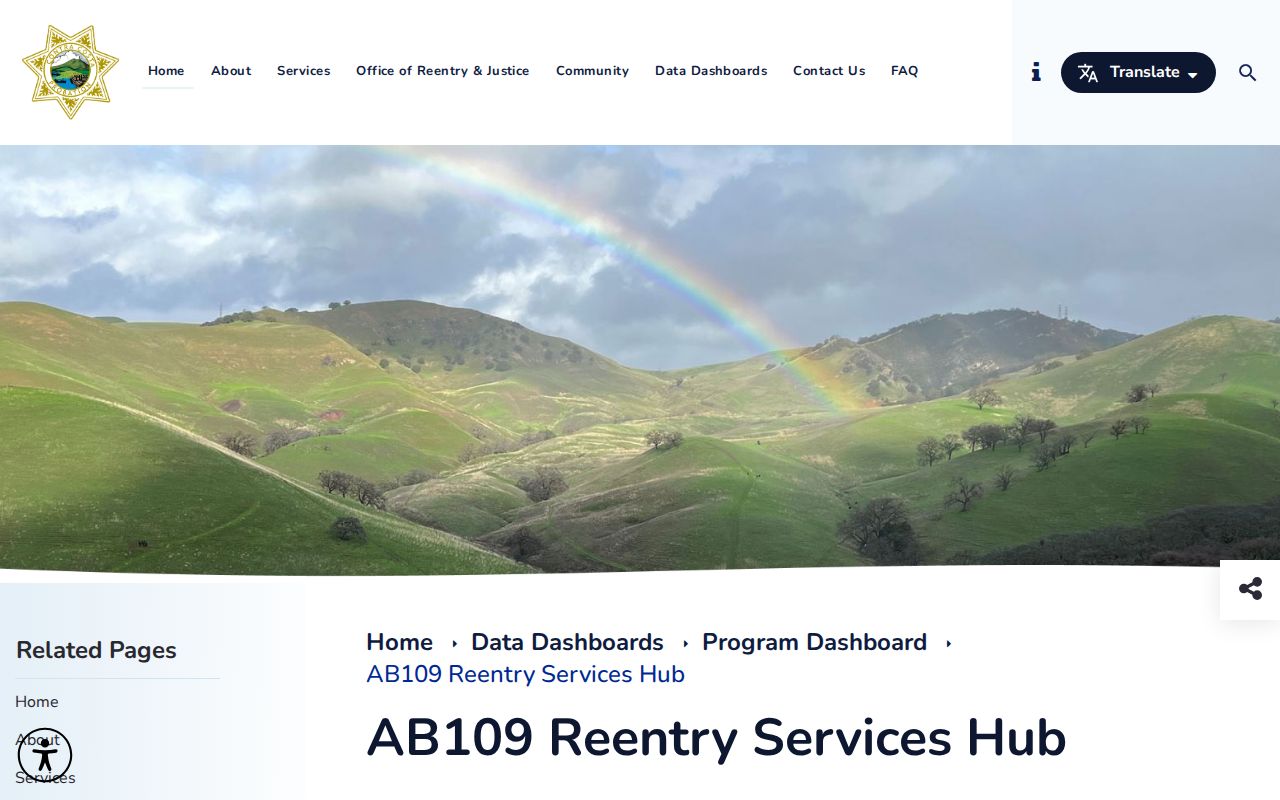
A reentry or service referral is not itself a release certificate. It is a local route for a person who is out of custody, reporting to supervision, or trying to comply with court and agency instructions after release.
Contra Costa Violation Status
Violation language can be confusing. A parole violation is an alleged breach of CDCR parole conditions. A probation violation is an alleged breach of a court or probation order. An absconder is generally a person who stops reporting or cannot be located by the supervising agency. These words do not all point to one public Contra Costa database.
CDCR DAPO has wanted-offender information, including a wanted-offenders link described in the research as focused on sex offenders being sought by DAPO. Contra Costa Sheriff has a Most Wanted link under investigations, but the sources reviewed did not identify a public countywide probation absconder list for general released inmates. For warrants, the Sheriff records routing points people to the court of jurisdiction or local law enforcement rather than a broad public warrant answer from the records counter.
- Parole
- State supervision after release from CDCR custody.
- Probation
- Court-ordered local supervision that may follow jail, a plea, or a sentence.
- PRCS
- Postrelease Community Supervision, a county-supervised track tied to California realignment.
- Absconder
- A supervised person alleged to have stopped reporting or left supervision contact.
- Discharge
- The end of custody or supervision authority for the relevant case or sentence.
Contra Costa Supervision Records
California public-records rules shape what can be confirmed about supervision. Contra Costa County's public-records guidance says county records are generally available unless a statute exempts them, and it tells requesters to send specific requests to the department that holds the record. For parole, that may mean CDCR, DAPO, or BPH. For probation, that may mean Contra Costa Probation or the Superior Court record that created the supervision term.
Not every supervision detail is public. Juvenile records, sealed records, medical or mental-health details, victim information, security-sensitive information, and some law-enforcement material can be withheld or redacted. The practical request should be narrow: ask for the disclosable order, release status, discharge status, or public supervision routing, not a full file. For court-created probation, the court record often gives the clearest public explanation of the term, violation, modification, or discharge.
Records & ID also routes many legal-status questions to the Superior Court, including dispositions, court dates, warrant checks, criminal histories, and court records. That routing matters for Contra Costa County parole and probation because a jail counter may confirm custody status, while the court file explains why the person was released to probation, remanded, sentenced, discharged, or ordered back to custody.
When Contra Costa Supervision Ends
Supervision ends through the agency and court path that created it. CDCR parole may end by discharge from parole authority. Probation may end by court order, sentence completion, successful termination, revocation with a new custody event, or another order in the criminal case. PRCS and mandatory supervision follow their own court and county rules. The key point is simple: release from a jail bed is not always release from all legal control.
Property, paperwork, and identity documents can matter after release. Contra Costa's Sheriff presentation says facility-held property is returned at release, and the county's reentry material describes pre-release connection work around documents and coping skills. Treat those details as release navigation facts. For formal proof, use the court order, CDCR or probation discharge record, VINE status where available, and a Sheriff or court records request when the public systems do not show enough.
When the record shows discharge, read which agency discharged the person. A CDCR parole discharge does not rewrite the original Contra Costa court case. A probation termination does not prove there was never a jail booking. A VINE release notice does not prove the supervision term ended. Each source answers its own part of the record, so the most reliable result comes from matching the release event, the court order, and the agency that supervised the person after release.